Shell
Shell
The problem
The problem
The problem
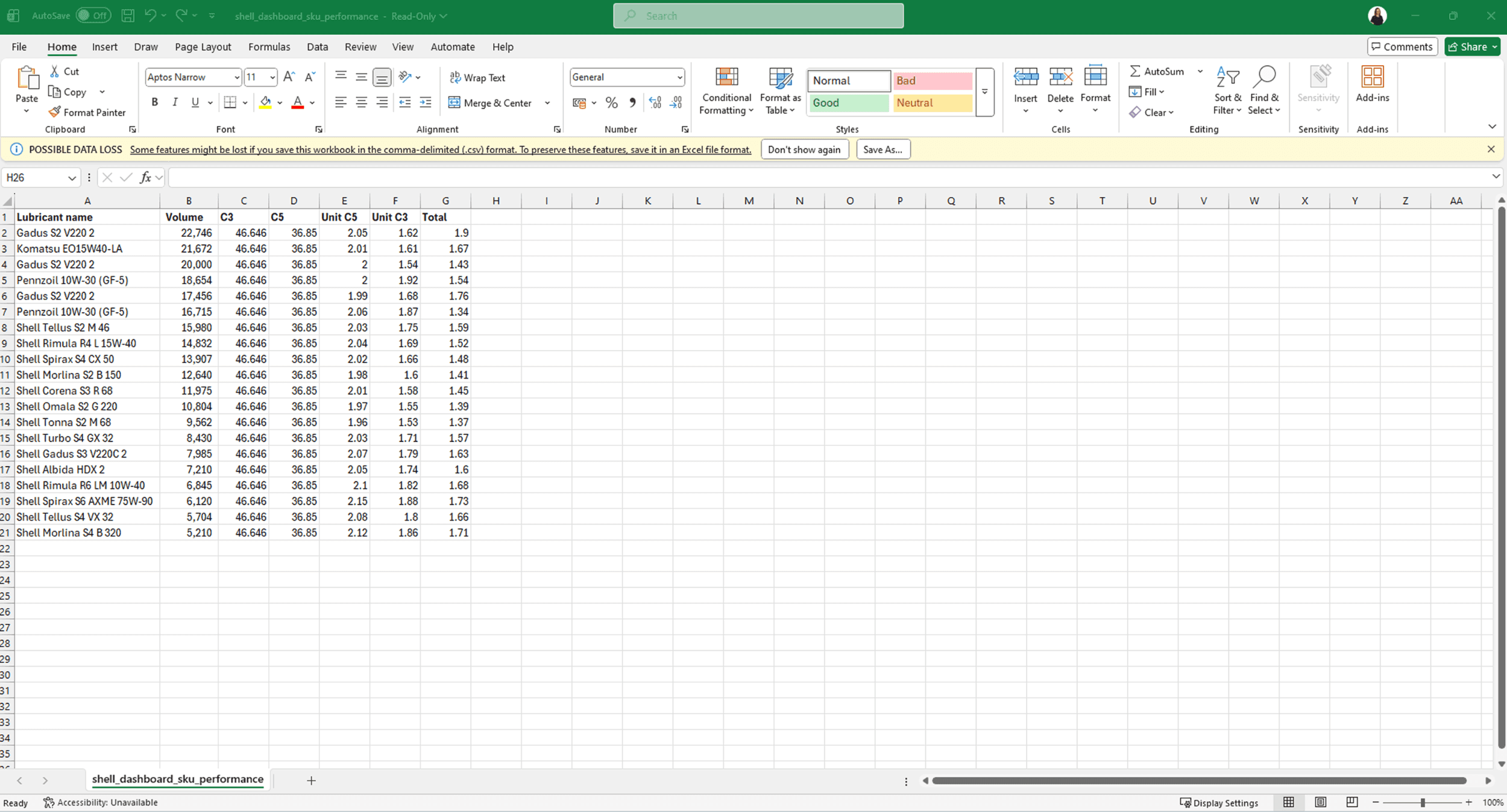
Shell's sales managers were running billion-pound relationships out of 1990s spreadsheets. Keep the clients happy, spot the cross-sell, the up-sell — all of it buried in Excel.
Shell's sales managers were running billion-pound relationships out of 1990s spreadsheets. Keep the clients happy, spot the cross-sell, the up-sell — all of it buried in Excel.
Shell Sales Managers struggled. They needed to maintain relationships with their existing clients while identifying cross-sell and up-sell opportunities.
The data they relied on was scattered across multiple legacy sources. That was about to change.
Year
Year
2020
2020
Industry
Industry
Oil and Gas
Oil and Gas
Scope of work
Scope of work
/
Ui/Ux/Product
Ui/Ux/Product
Timeline
Timeline
12 Months
12 Months
Outcome
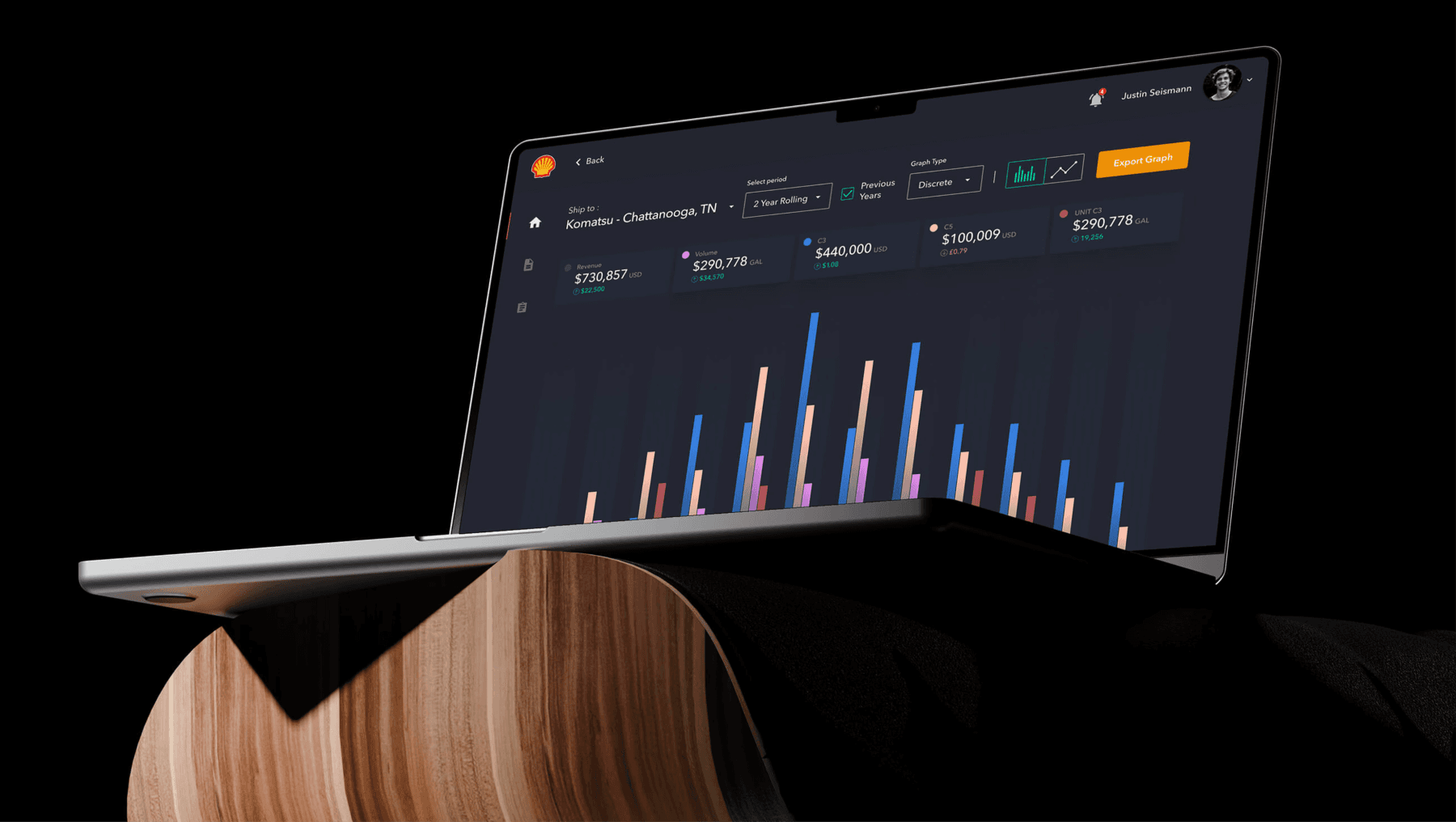
The MVP launched and scaled into a working model across 19 Shell buy/sell regions out of 25 in North America within 12 months. Financial impact unknown
The MVP launched and scaled into a working model across 19 Shell buy/sell regions out of 25 in North America within 12 months. Financial impact unknown
The Problem
The Problem
The Problem
A $500M+ global field sales operation was running on spreadsheets, faxes, and hallway approvals — creating delays, errors, and limited commercial visibility.
A $500M+ global field sales operation was running on spreadsheets, faxes, and hallway approvals — creating delays, errors, and limited commercial visibility.
A $500M+ global field sales operation was running on spreadsheets, faxes, and hallway approvals — creating delays, errors, and limited commercial visibility.
A $500M+ global field sales operation was running on spreadsheets, faxes, and hallway approvals — creating delays, errors, and limited commercial visibility.
The Solution
The Solution
The Solution
Remove sales friction, increase field productivity, and give leadership real-time commercial clarity.
Remove sales friction, increase field productivity, and give leadership real-time commercial clarity.
Remove sales friction, increase field productivity, and give leadership real-time commercial clarity.
Remove sales friction, increase field productivity, and give leadership real-time commercial clarity.
The Outcome
The Outcome
The Outcome
12-Month Impact & Adoption : The MVP launched and scaled into a working model across 19 Shell buy/sell regions in North America within 12 months.
12-Month Impact & Adoption : The MVP launched and scaled into a working model across 19 Shell buy/sell regions in North America within 12 months.
12-Month Impact & Adoption : The MVP launched and scaled into a working model across 19 Shell buy/sell regions in North America within 12 months. This transition from pilot to regional adoption validated both the system architecture and its operational viability in live commercial environments.
12-Month Impact & Adoption : The MVP launched and scaled into a working model across 19 Shell buy/sell regions in North America within 12 months.
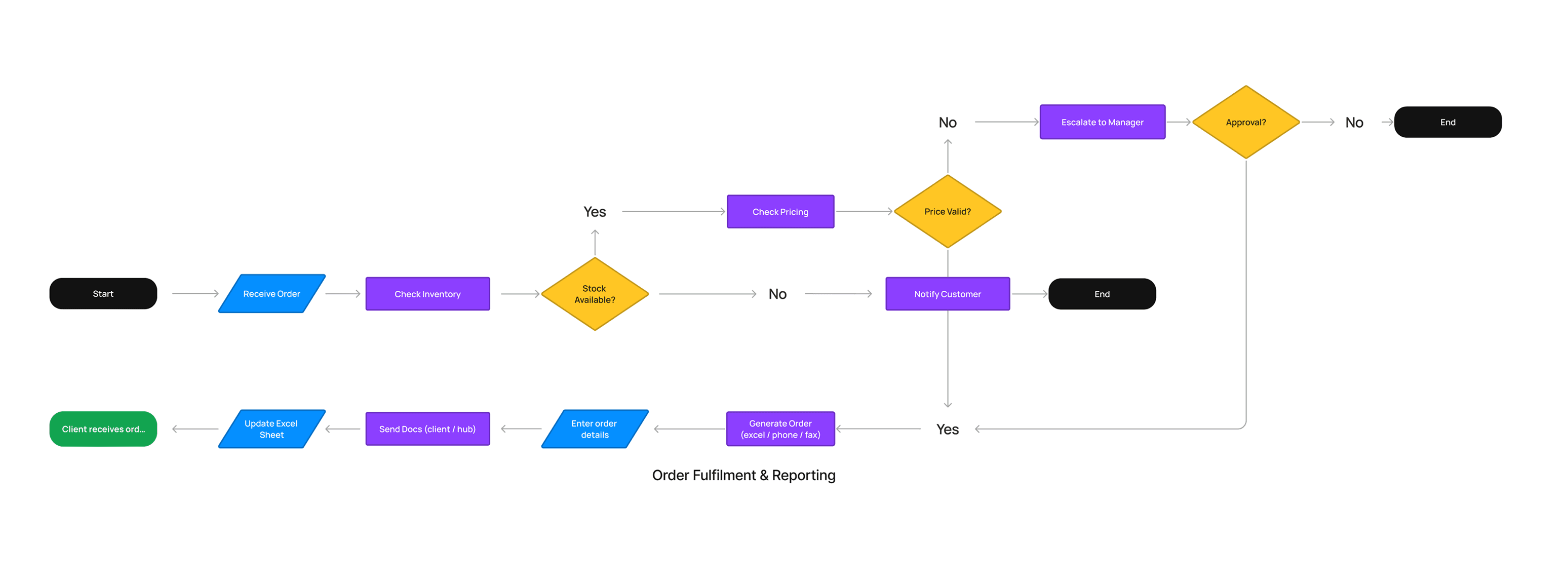
A fragmented sales workflow driven by spreadsheets and escalation
A fragmented sales workflow driven by spreadsheets and escalation
A fragmented sales workflow driven by spreadsheets and escalation
Critical pricing and margin decisions were being routed through disconnected spreadsheets and manual escalations, creating delays, duplicate entry, and inconsistent data across regions.
As approval bottlenecks grew, teams built their own Excel workarounds, further fragmenting the system and eroding trust in the numbers.
Critical pricing and margin decisions were being routed through disconnected spreadsheets and manual escalations, creating delays, duplicate entry, and inconsistent data across regions.
As approval bottlenecks grew, teams built their own Excel workarounds, further fragmenting the system and eroding trust in the numbers.
Critical pricing and margin decisions were being routed through disconnected spreadsheets and manual escalations, creating delays, duplicate entry, and inconsistent data across regions.
As approval bottlenecks grew, teams built their own Excel workarounds, further fragmenting the system and eroding trust in the numbers.
So we flew to Texas …
So we flew to Texas …
So we flew to Texas …
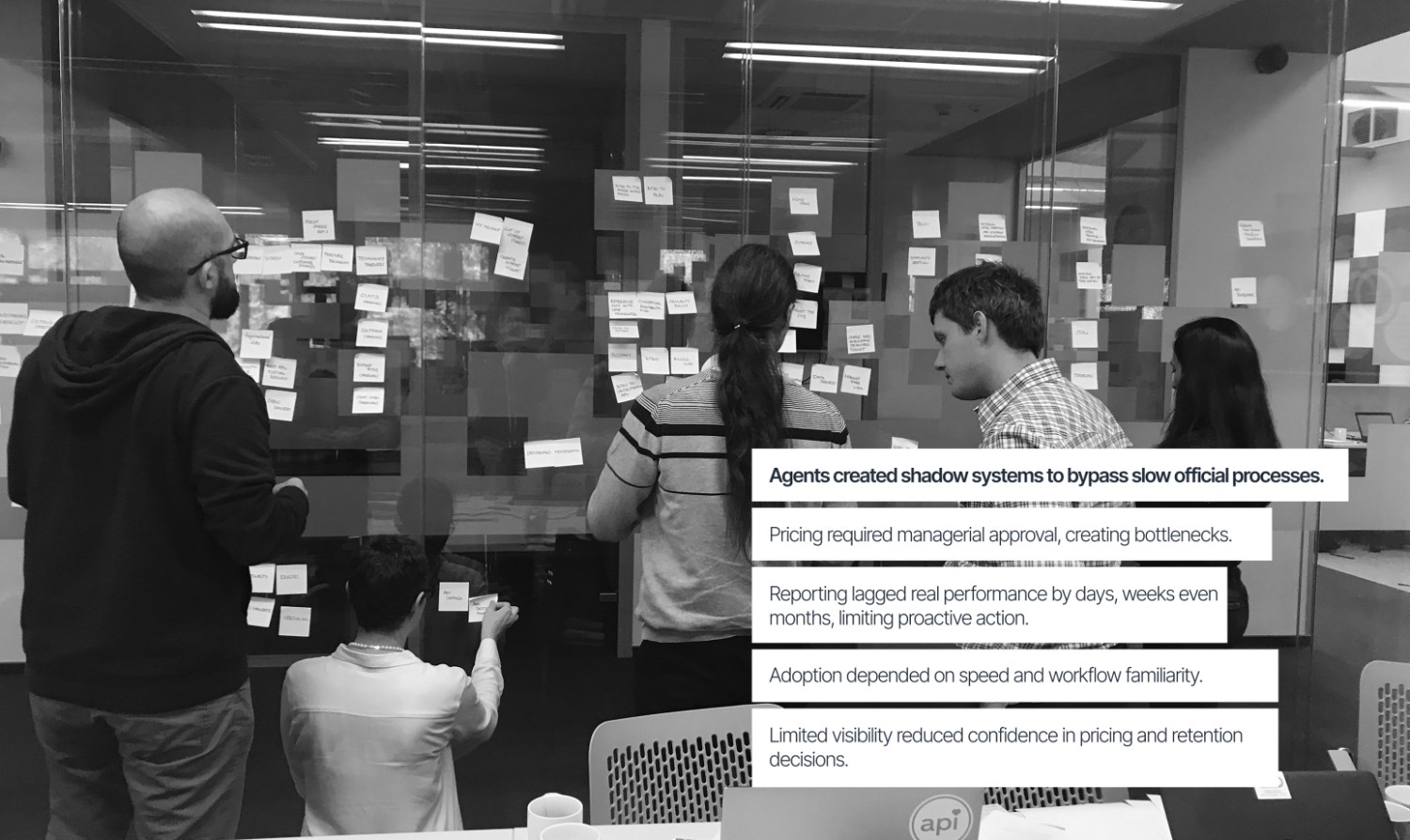
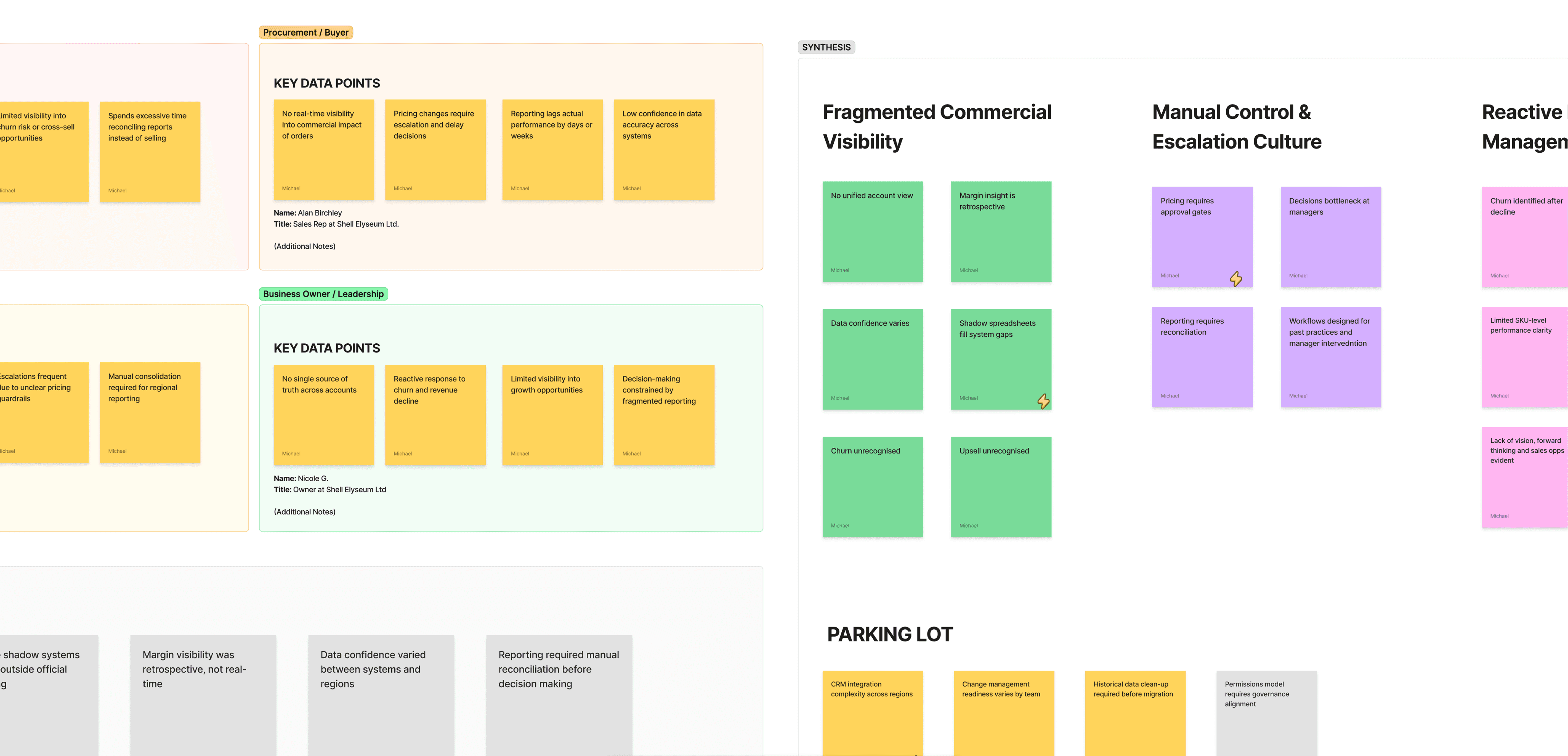
Field research in Houston exposed a culture shaped by bottlenecks and workarounds, where teams relied on shadow systems to move faster than official processes allowed.
What was initially framed as a tooling issue revealed itself as a structural and behavioural problem embedded in how revenue decisions were governed.
Field research in Houston exposed a culture shaped by bottlenecks and workarounds, where teams relied on shadow systems to move faster than official processes allowed.
Field research in Houston exposed a culture shaped by bottlenecks and workarounds, where teams relied on shadow systems to move faster than official processes allowed..
Field research in Houston exposed a culture shaped by bottlenecks and workarounds, where teams relied on shadow systems to move faster than official processes allowed.
Synthesis:
Synthesis:
Synthesis:
The team recognised that escalation and reactive decision-making were deeply institutionalised, while real-time visibility was almost absent.
This insight reframed the challenge from fixing workflows to redesigning how commercial intelligence flowed across the organisation. (original post-it notes capture lost. Recreated with figjam)
We recognised that escalation and reactive decision-making were deeply institutionalised, while real-time visibility was almost absent. This insight reframed the challenge from fixing workflows to redesigning how commercial intelligence flowed across the organisation.
The team recognised that escalation and reactive decision-making were deeply institutionalised, while real-time visibility was almost absent.
This insight reframed the challenge from fixing workflows to redesigning how commercial intelligence flowed across the organisation. (original post-it notes capture lost. Recreated with figjam)
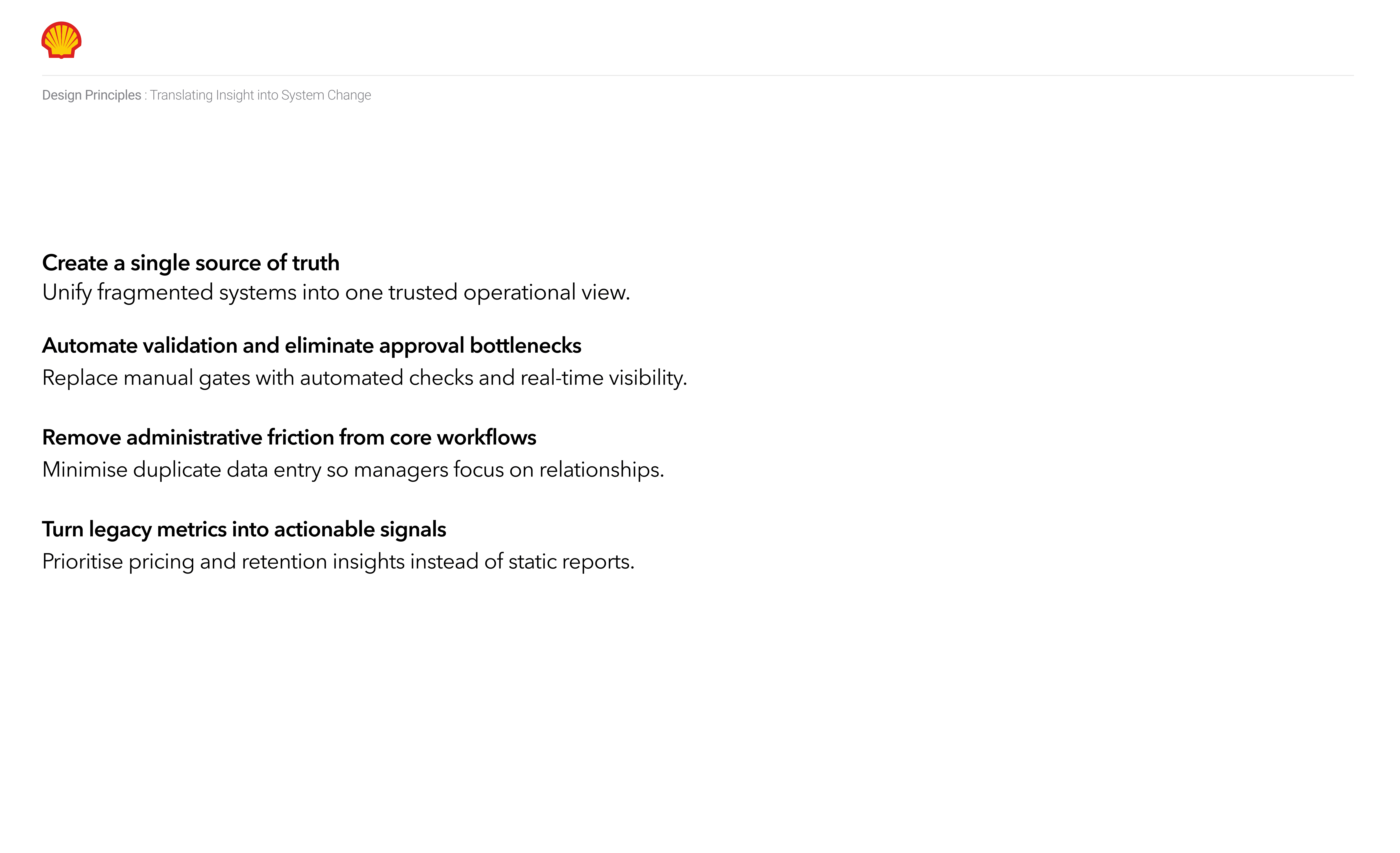
From here, we pulled out our Design Principles:
Translating Insight into System Change
From here, we pulled out our Design Principles: Translating Insight into System Change
From here, we pulled out our Design Principles: Translating Insight into System Change
While the existing system functioned, it governed billions in annual trading volume, meaning even marginal improvements in visibility and decision speed carried significant commercial impact.
These principles defined the operating model first, ensuring the interface would reinforce behavioural change rather than simply visualise existing dysfunction.
Legitimate concerns surfaced around margin risk and regional autonomy. After all, we were gatecrashing a way of doing business that had been deeply embedded in Shell, since the early 90s. When 'change' can literally mean $billions is on the line, not many people we're looking to rock the boat.
I therefore proposed a phased approach to design rather than imposed, starting with the smallest buy/sell region for 28 days, collect feedback and then act accordingly.
While the existing system functioned, it governed billions in annual trading volume, meaning even marginal improvements in visibility and decision speed carried significant commercial impact.
These principles defined the operating model first, ensuring the interface would reinforce behavioural change rather than simply visualise existing dysfunction.
Legitimate concerns surfaced around margin risk and regional autonomy. After all, we were gatecrashing a way of doing business that had been deeply embedded in Shell, since the early 90s.
I therefore proposed a phased approach rather than imposed, starting with the smallest buy/sell region for 28 days, collect feedback and then act accordingly.
While the existing system functioned, it governed billions in annual trading volume, meaning even marginal improvements in visibility and decision speed carried significant commercial impact.
These principles defined the operating model first, ensuring the interface would reinforce behavioural change rather than simply visualise existing dysfunction.
Legitimate concerns surfaced around margin risk and regional autonomy. After all, we were gatecrashing a way of doing business that had been deeply embedded in Shell, since the early 90s. When 'change' can literally mean $billions is on the line, not many people we're looking to rock the boat.
I therefore proposed a phased approach rather than imposed, starting with the smallest buy/sell region for 28 days, collect feedback and then act accordingly.
While the existing system functioned, it governed billions in annual trading volume, meaning even marginal improvements in visibility and decision speed carried significant commercial impact.
These principles defined the operating model first, ensuring the interface would reinforce behavioural change rather than simply visualise existing dysfunction.
Legitimate concerns surfaced around margin risk and regional autonomy. After all, we were gatecrashing a way of doing business that had been deeply embedded in Shell, since the early 90s. When 'change' can literally mean $billions is on the line, not many people we're looking to rock the boat.
I therefore proposed a phased approach to design rather than imposed, starting with the smallest buy/sell region for 28 days, collect feedback and then act accordingly.
Next: Laying out the Target Architecture
Next: Laying out the Target Architecture
Next: Laying out the Target Architecture
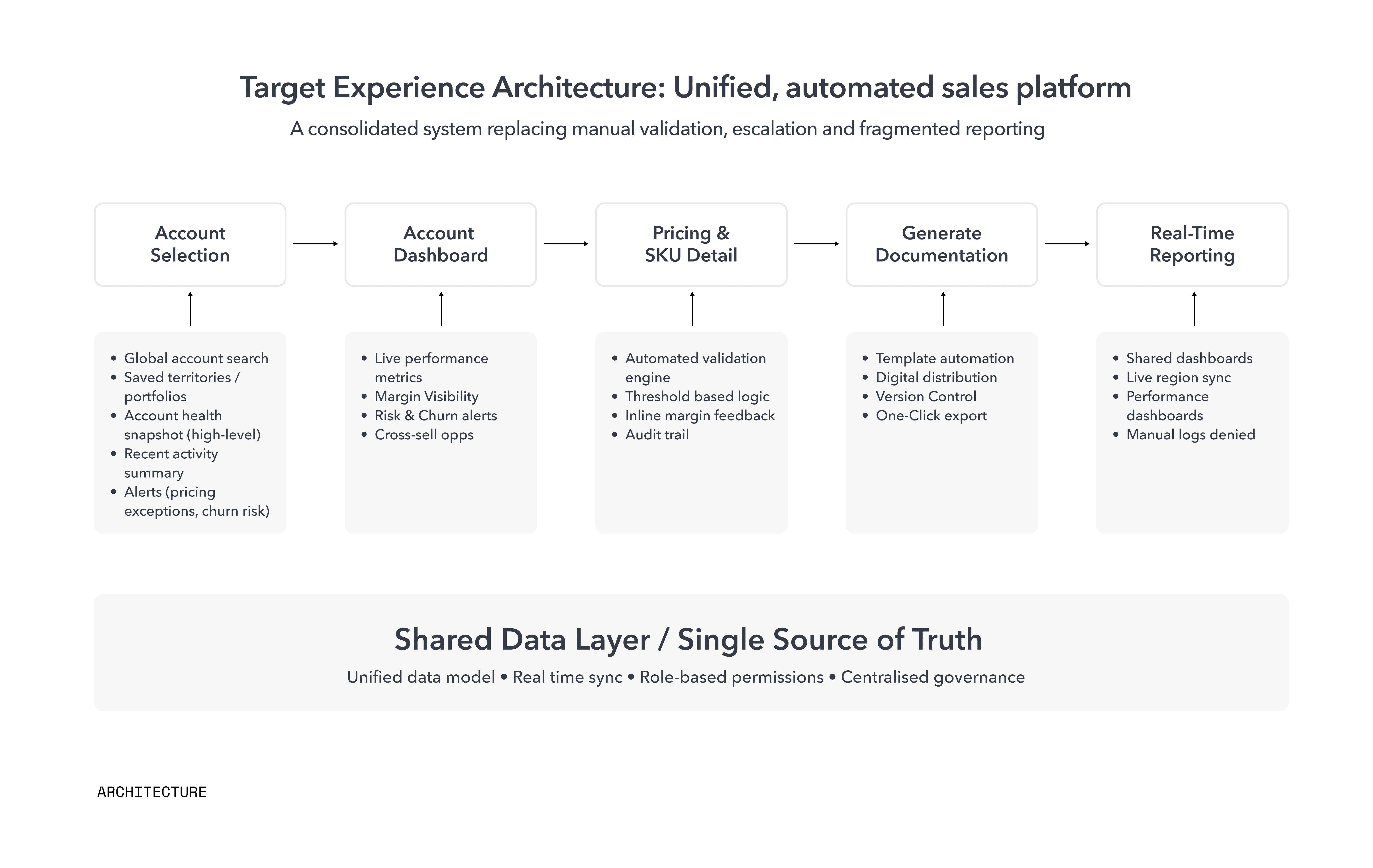
I translated the synthesis into a unified target architecture that consolidated validation, documentation, and reporting into a single operational flow, replacing fragmented handoffs with structured, real-time intelligence.
This shifted the system from reactive escalation to proactive commercial visibility, embedding decision support directly into the workflow rather than layering it on afterward.
I translated the synthesis into a unified target architecture that consolidated validation, documentation, and reporting into a single operational flow, replacing fragmented handoffs with structured, real-time intelligence. This shifted the system from reactive escalation to proactive commercial visibility, embedding decision support directly into the workflow rather than layering it on afterward.
I translated the synthesis into a unified target architecture that consolidated validation, documentation, and reporting into a single operational flow, replacing fragmented handoffs with structured, real-time intelligence.
This shifted the system from reactive escalation to proactive commercial visibility, embedding decision support directly into the workflow rather than layering it on afterward.
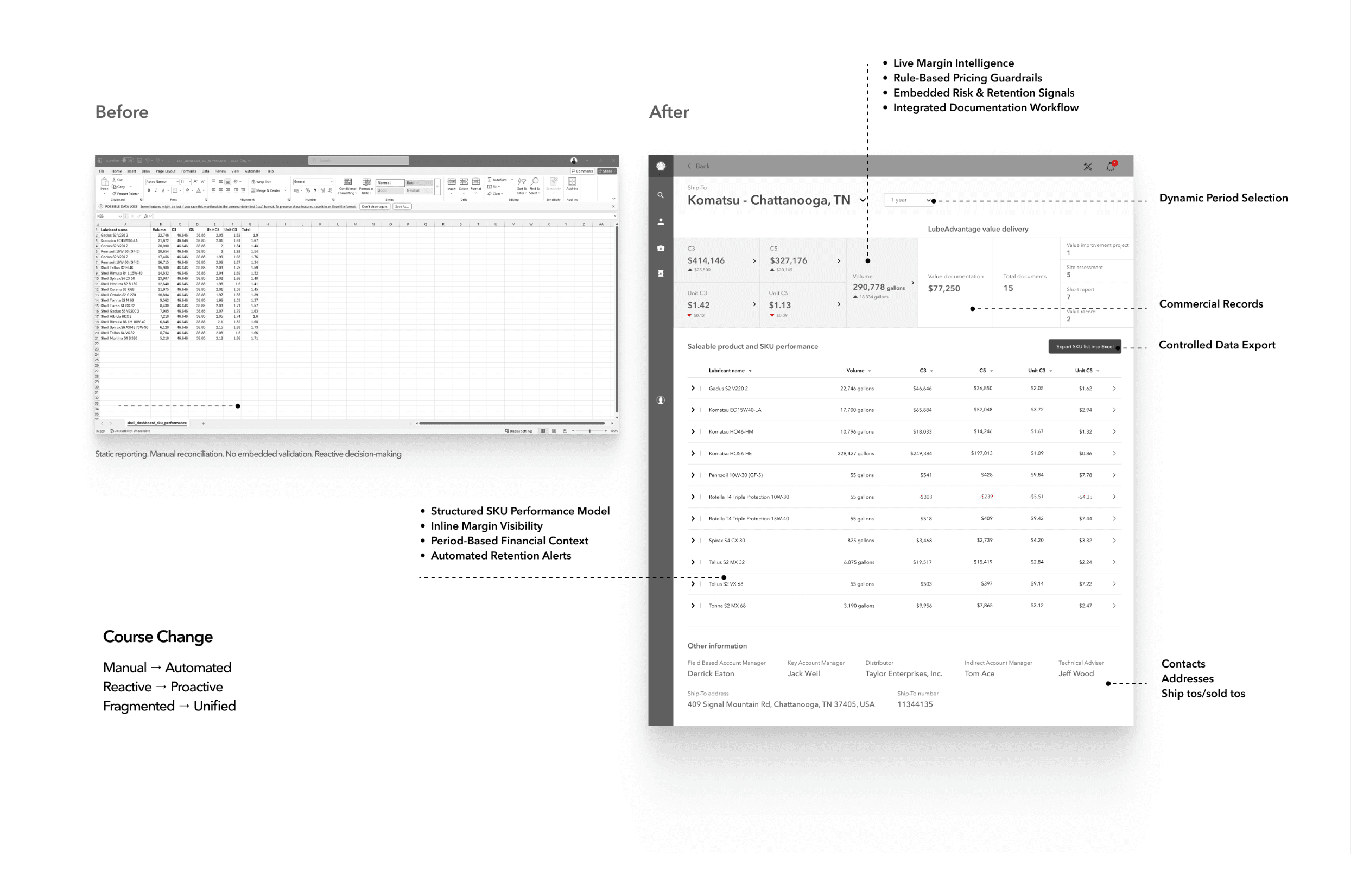
From spreadsheet reporting to embedded commercial intelligence:
From spreadsheet reporting to embedded commercial intelligence:
From spreadsheet reporting to embedded commercial intelligence:
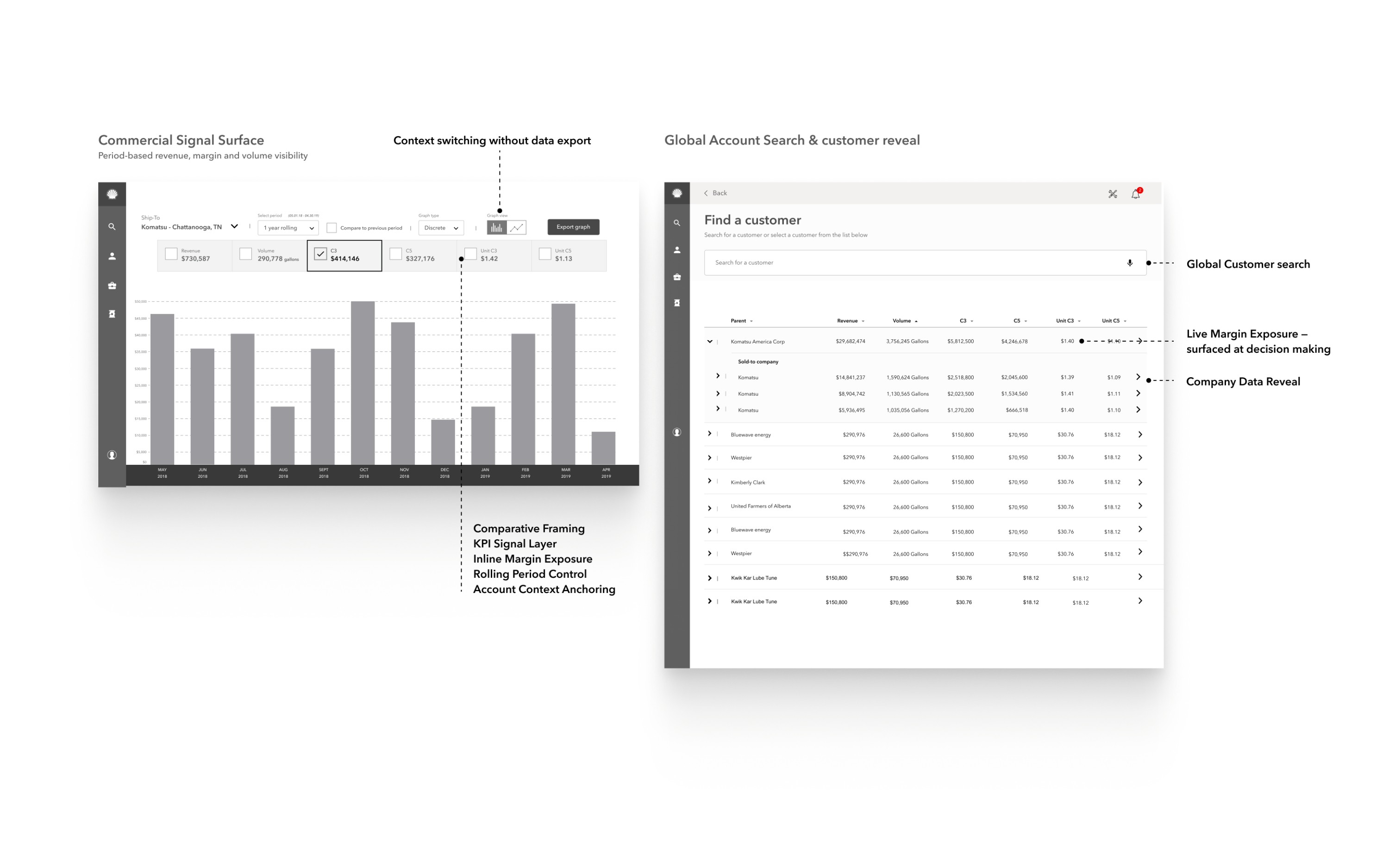
Given the complexity and data density of the commercial model, low-fidelity sketches wouldn’t surface real constraints, so I moved quickly into high-fidelity structural wireframes to test hierarchy, margin logic, and validation rules against
live scenarios.
Given the complexity and data density of the commercial model, low-fidelity sketches wouldn’t surface real constraints, so I moved quickly into high-fidelity structural wireframes to test hierarchy, margin logic, and validation rules against live scenarios.
Given the complexity and data density of the commercial model, low-fidelity sketches wouldn’t surface real constraints, so I moved quickly into high-fidelity structural wireframes to test hierarchy, margin logic, and validation rules against
live scenarios.
Given the complexity and data density of the commercial model, low-fidelity sketches wouldn’t surface real constraints, so I moved quickly into high-fidelity structural wireframes to test hierarchy, margin logic, and validation rules against live scenarios.
From validated model to production interface
From validated model to production interface
From validated model to production interface
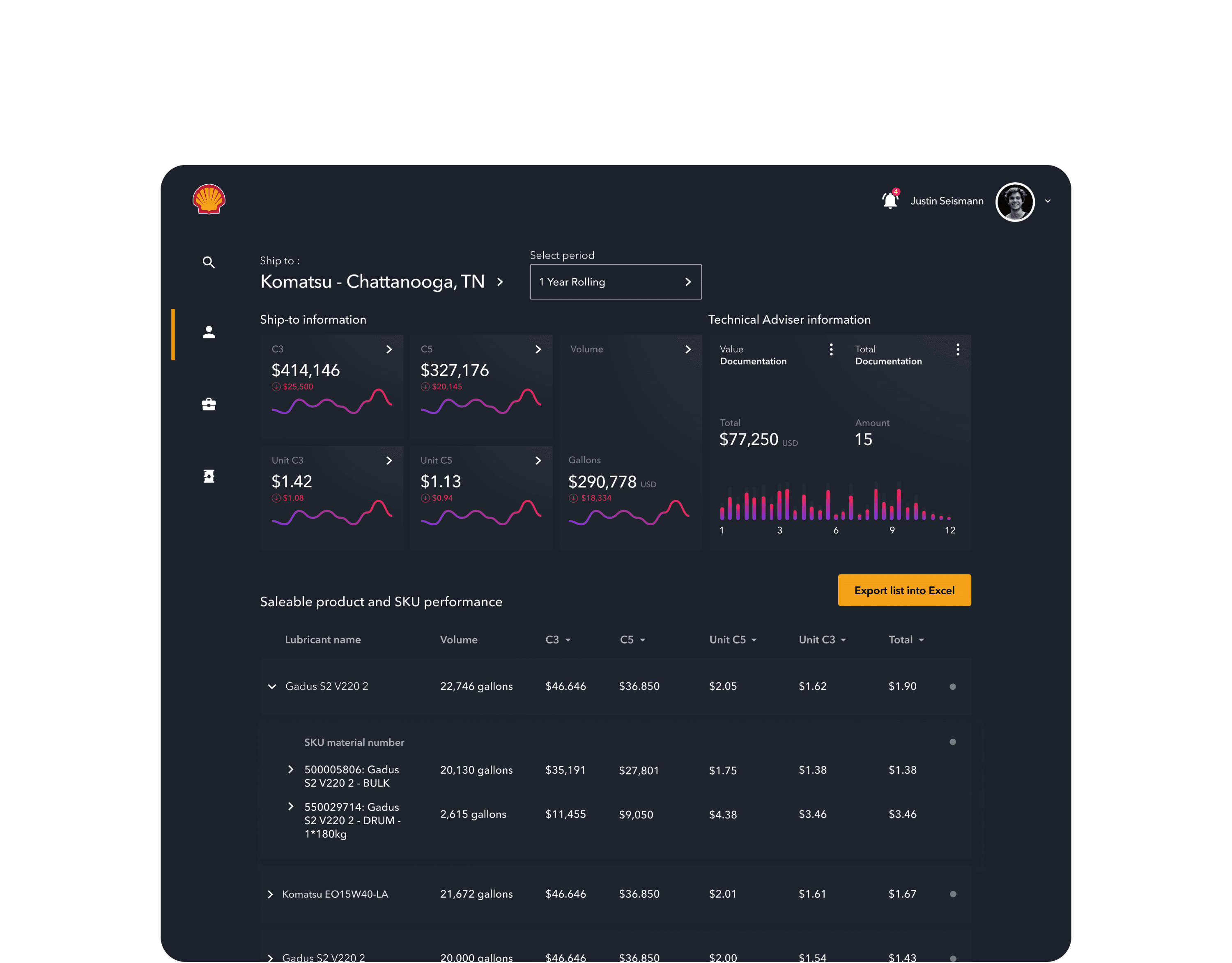
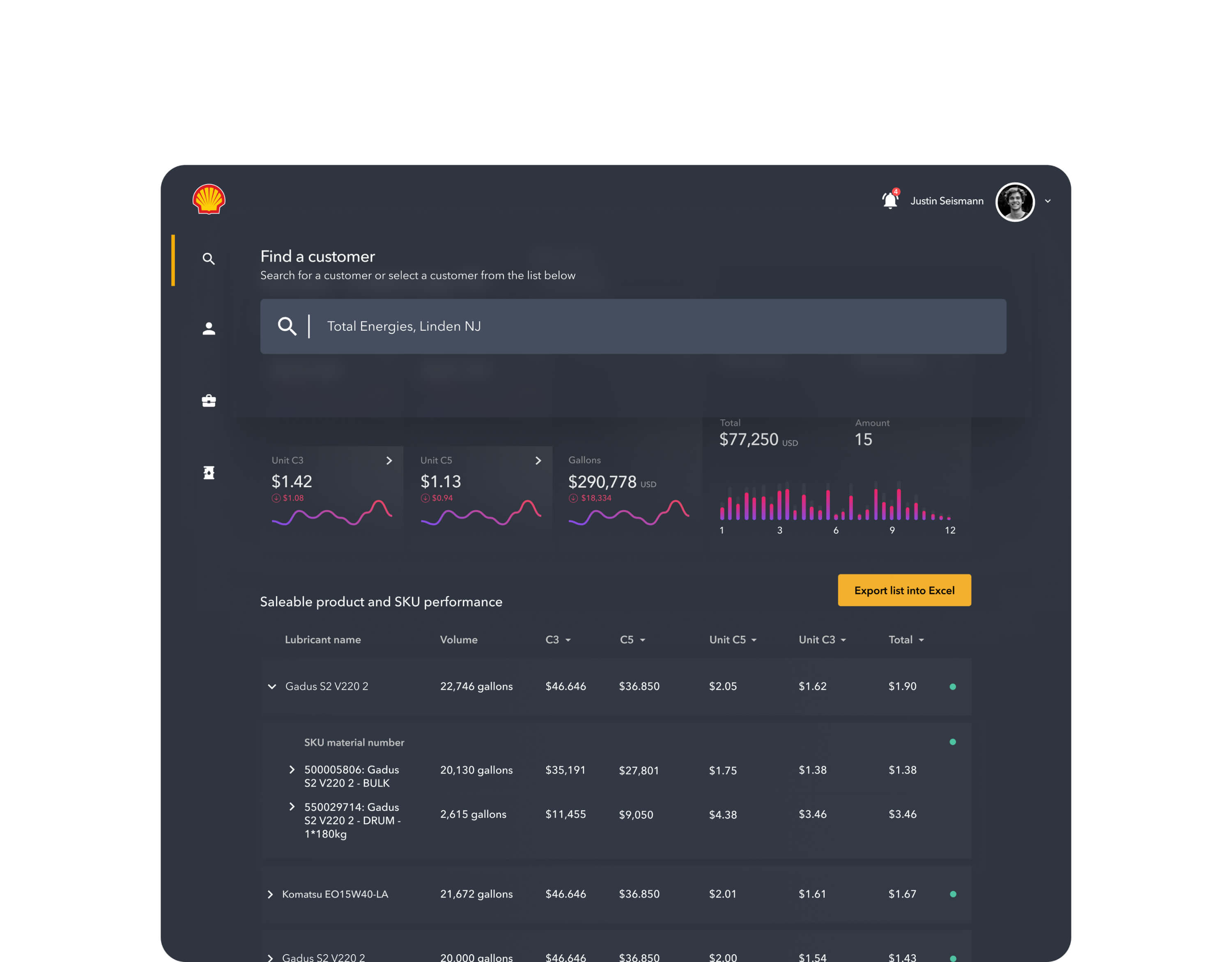
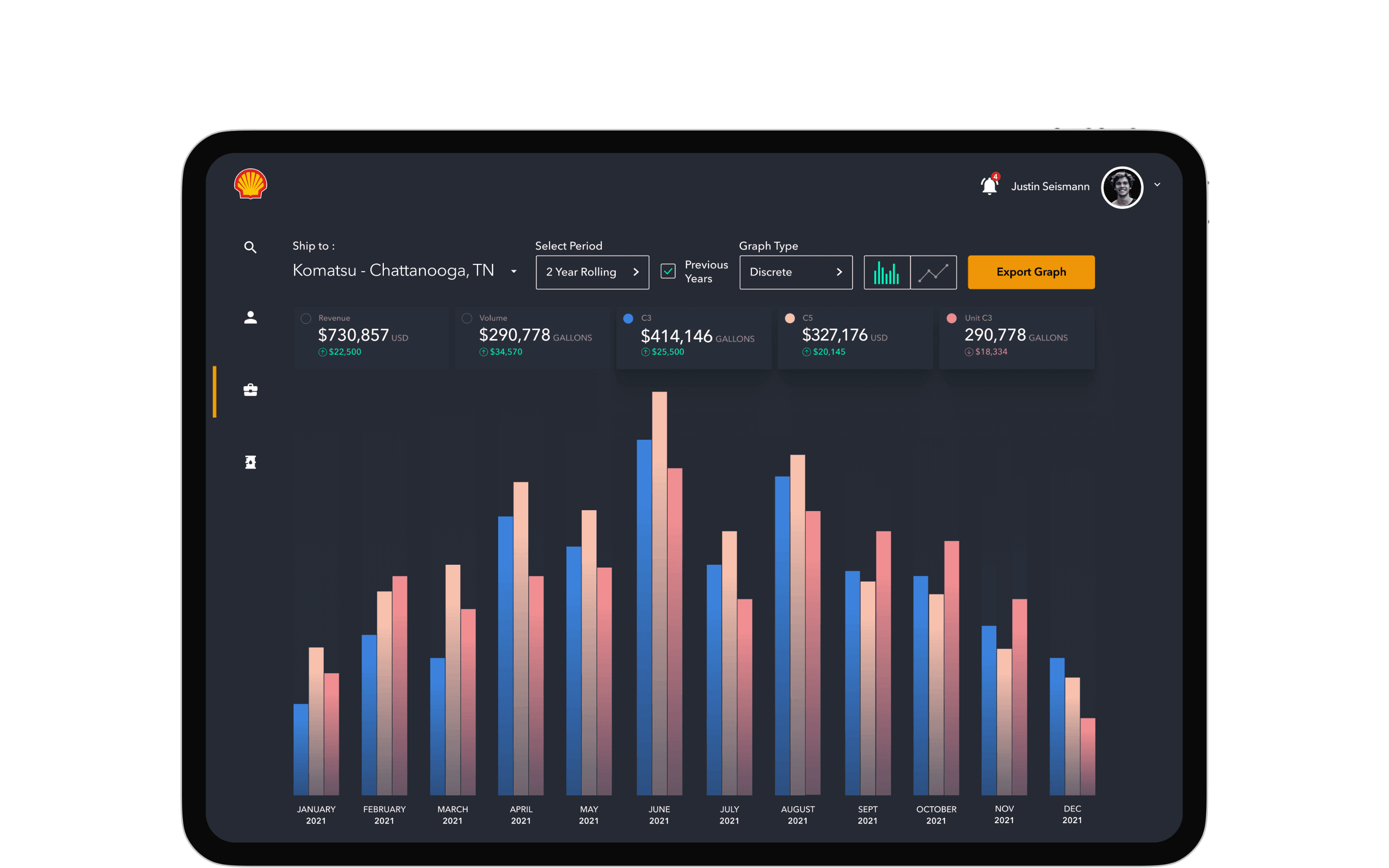
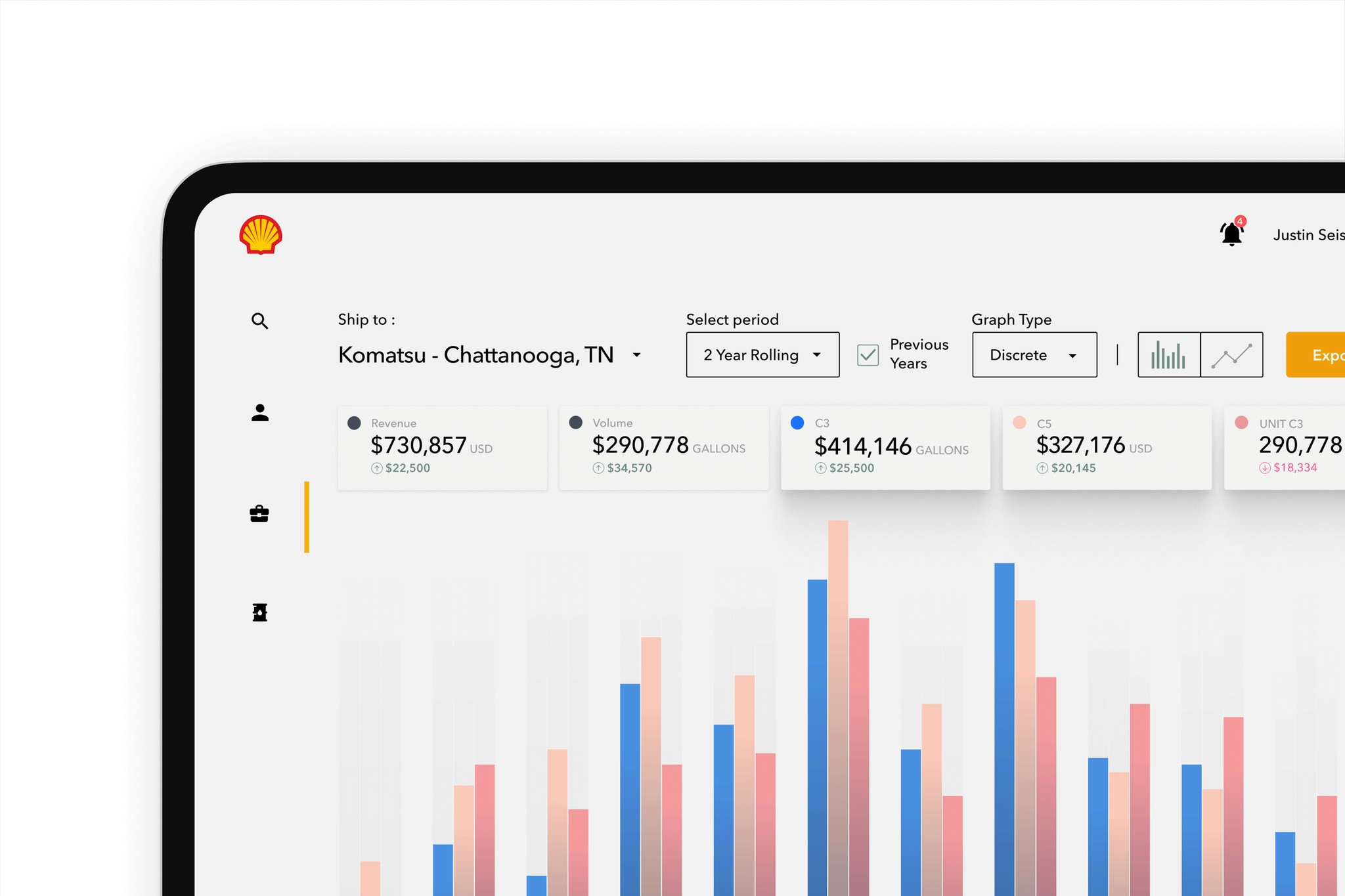
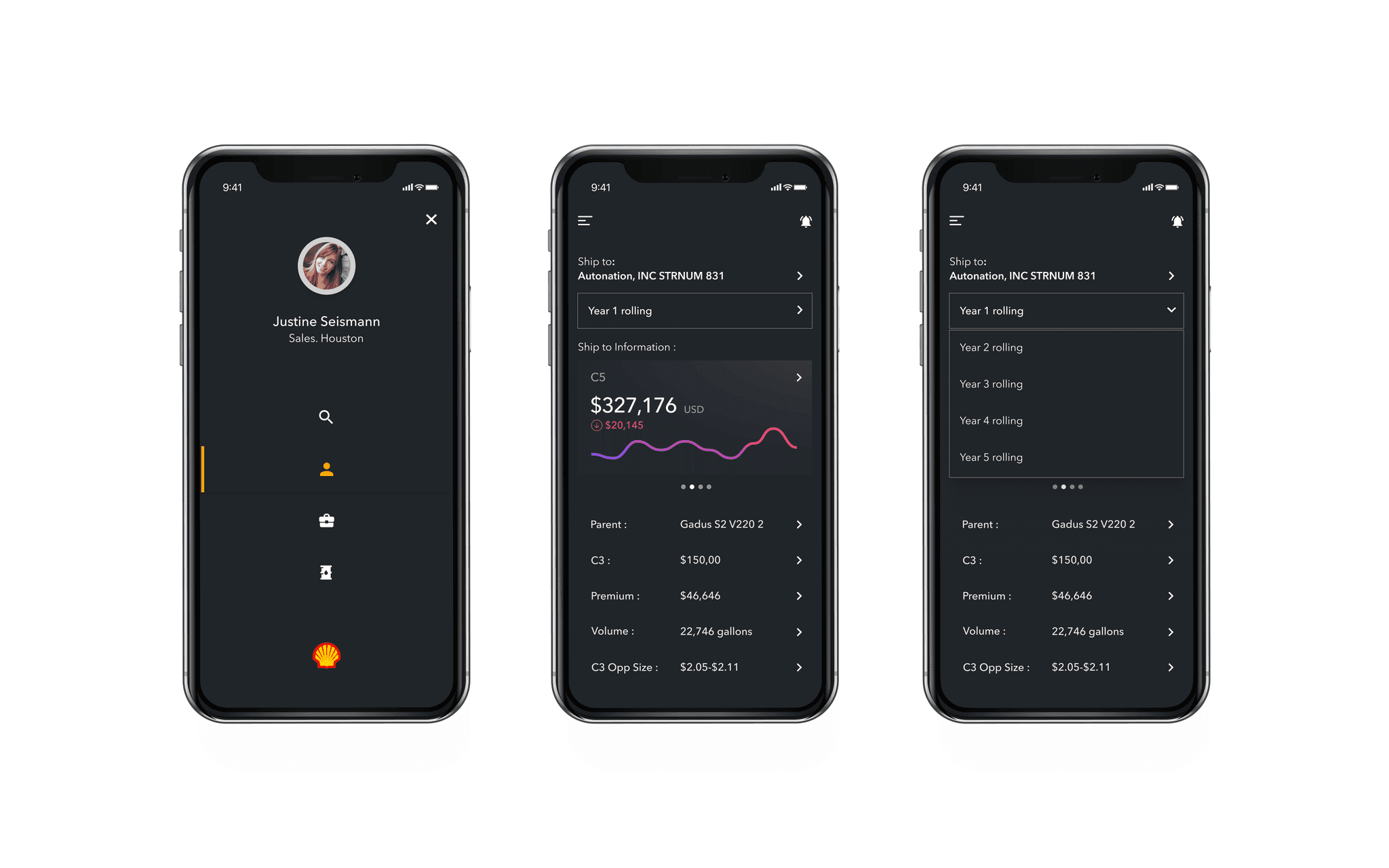
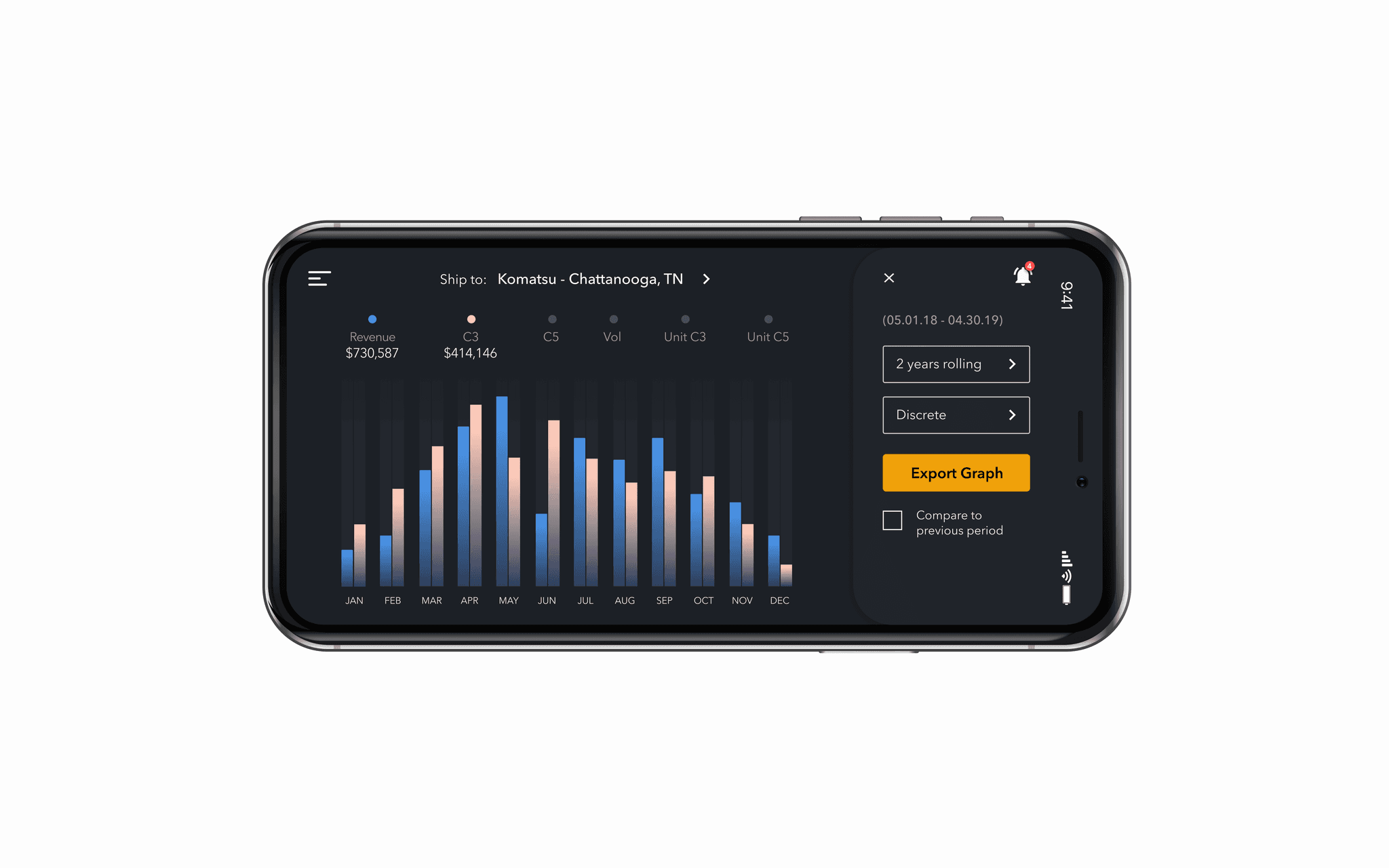
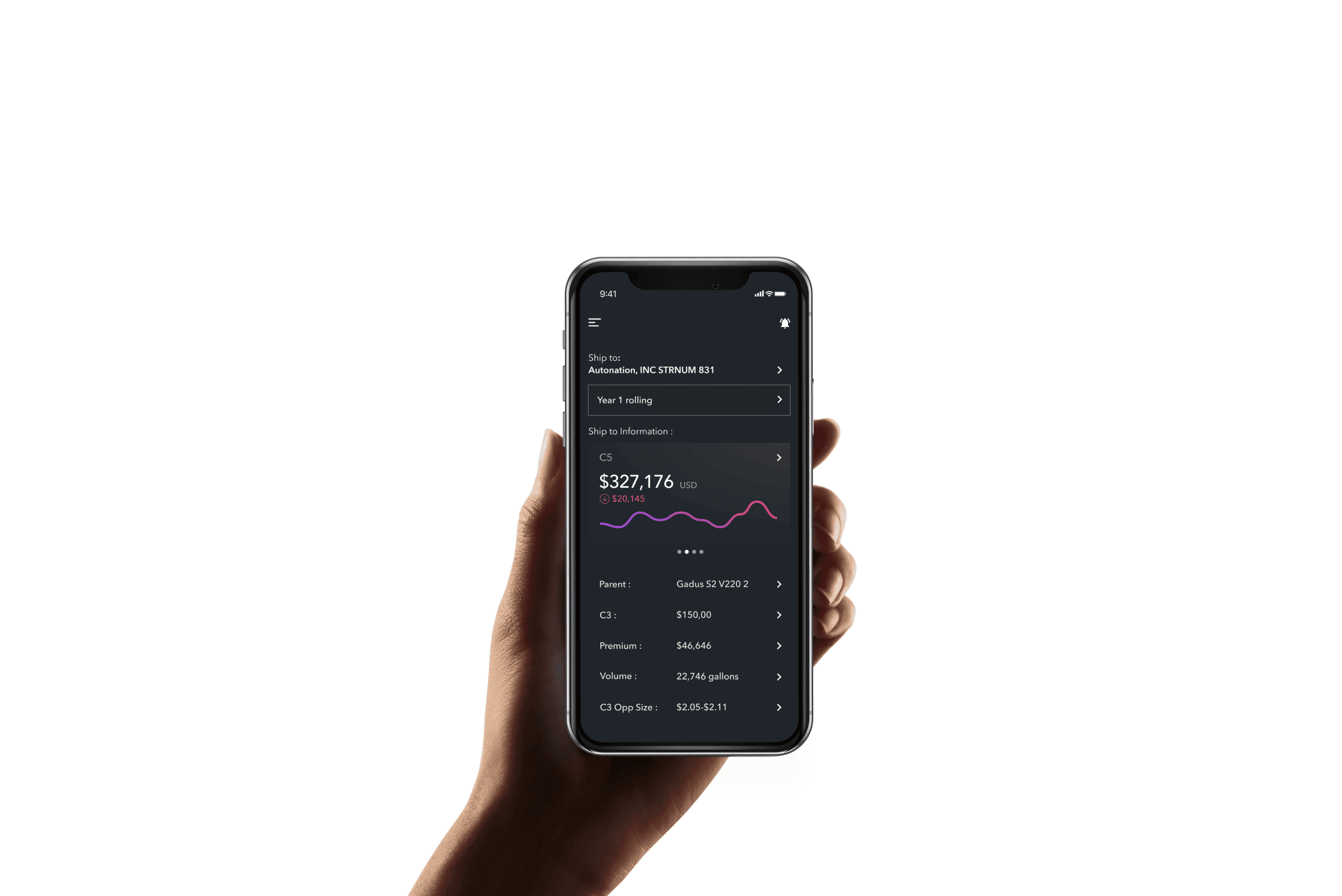
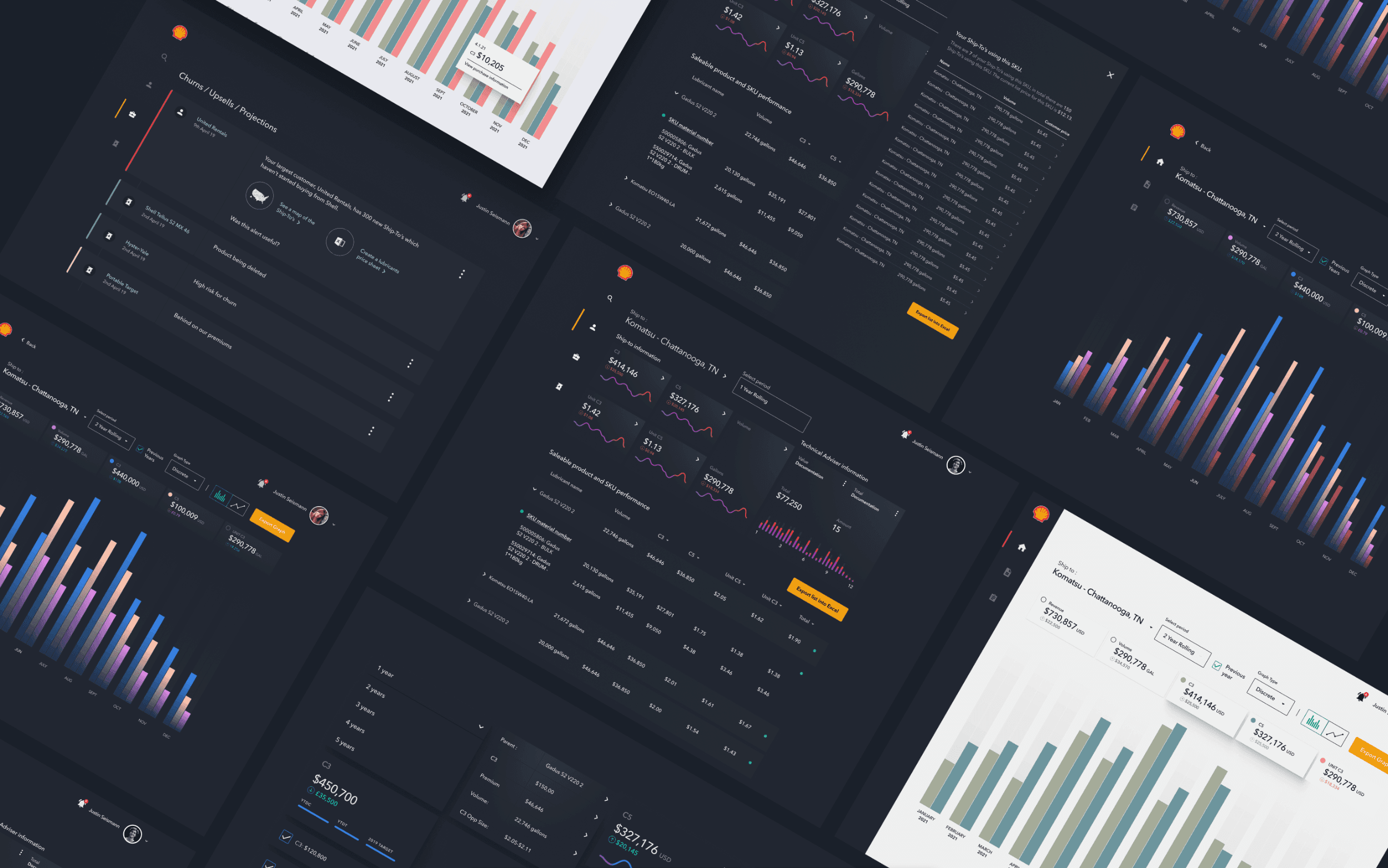
Following five rounds of structured iteration and user validation, I moved from refining system logic to assembling modular interface components, translating tested decision frameworks into a scalable build-ready product.
Following five rounds of structured iteration and user validation, I moved from refining system logic to assembling modular interface components, translating tested decision frameworks into a scalable build-ready product.
Following five rounds of structured iteration and user validation, I moved from refining system logic to assembling modular interface components, translating tested decision frameworks into a scalable build-ready product.


Let’s talk.
Tell me about your project-whether it’s a app, website, product creation or a build with Ai.
Quick response.
If you’re ready to create and collaborate, I’d love to hear from you.

Lead Product Designer
Moodflo
Michael Ruocco
Let’s talk.
Tell me about your project-whether it’s a app, website, product creation or a build with Ai.
Quick response.
If you’re ready to create and collaborate, I’d love to hear from you.
Lead Product Designer
Moodflo
Michael Ruocco